The same conversation, from business direction to working software
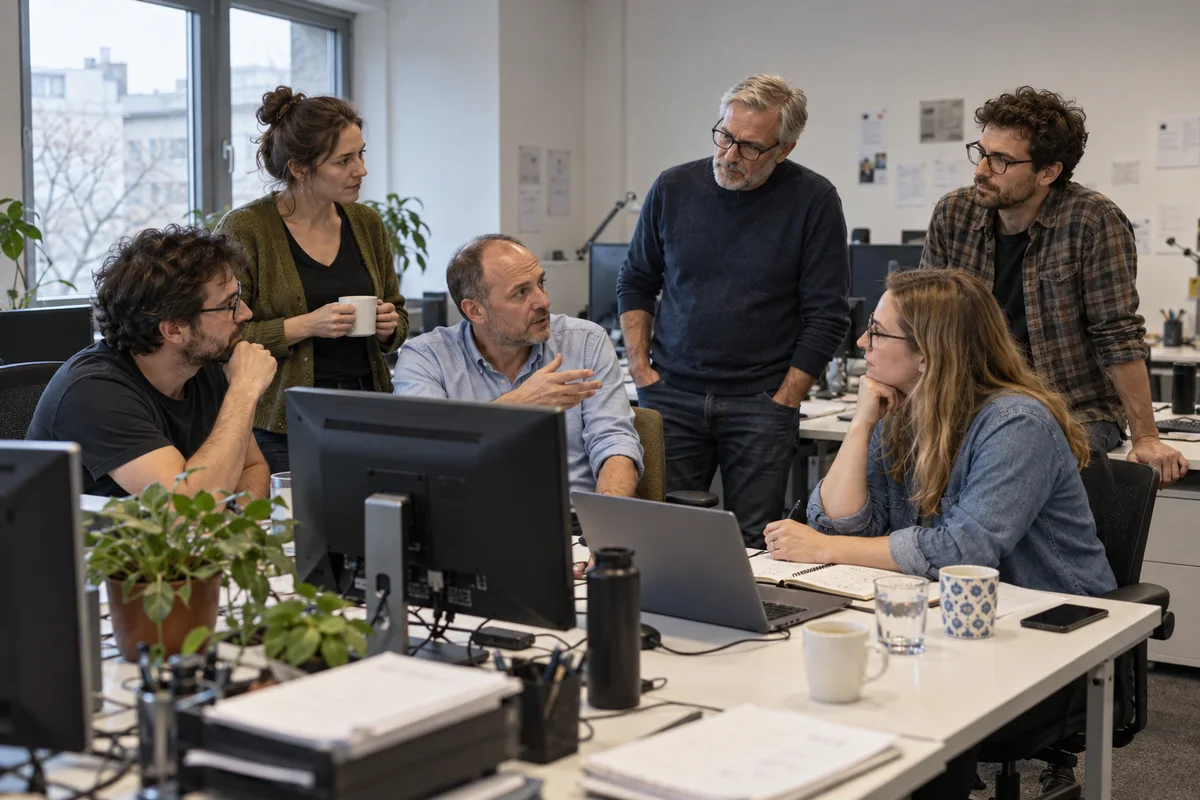
We want to understand why customers choose you, where you see opportunity and what the organisation needs to make it happen. We work with business owners and the people who sell, plan, deliver and support the work. Their knowledge shapes what a solution needs to do.
Our team connects those insights to design and engineering. A commercial commitment changes a process. Responsibility requires appropriate authority. A useful interface depends on reliable information and business logic. We work through those decisions together, including when they cross applications or team boundaries.
IndustrylinQ Europe B.V. is based in the Netherlands and works with European clients. Our culture draws on experience building and selling businesses, developing products and collaborating internationally. That experience shapes how we work: understand the opportunity, make clear choices and take responsibility for delivering them.
Our culture shows up in the decisions we make
We ask questions before settling on a solution. What promise do your customers rely on? Where does your way of working create value? What already works well and should be preserved?
An employee dealing with an exception has something important to contribute to the design. An internal developer may understand dependencies that never made it into the brief. We take that experience seriously. We share designs and working software, discuss what needs to change and use that feedback in the next iteration.
We are direct about what we know, what needs testing and who is responsible for the work. We may recommend keeping an existing system or having your own team develop the solution. Good advice should give you a sound decision and a practical way forward.
Autonomy requires knowledge, authority and the ability to act
Someone capable of assessing a customer request also needs the information and permission to follow through. Otherwise, responsibility has moved without the means to carry it.
Three questions guide our design: what does this person need to know, what can they decide and what must they be able to do? When is involving a colleague the right next step?
This matters at a machine, at the front desk, in the office and in the field. Expertise is not determined by a job title. Good support gives people more room to use their experience, help a customer and develop their skills.
AI should strengthen expertise, not remove the human element
AI can make knowledge accessible, prepare information and carry out tasks within defined boundaries. We examine where that genuinely improves the work. Which sources can be used? Which judgements belong with an employee? Which actions can run independently?
Personal attention is part of the value many businesses offer. A colleague who knows the customers and understands what they need deserves better support. Replacing people is not the purpose we design around.
AI can also accelerate software development. Responsibility for design, quality and operation remains with us. Our engineering approach explains how business logic, security, testing and ongoing operations fit together.
Working together with clear responsibilities
Your business knows its market and how the work is done. A product owner or design partner may already have developed much of the plan. We build on that work and connect the business, design and engineering questions. We agree who makes decisions and which parts of the assignment we own.
For KidsJobs, we took a business vision through product development to an app and backend. For an employers association, we built from another partner’s designs. With a building materials supplier, we work on existing software and guide internal developers. The team we work alongside helps determine how we organise the assignment.
Throughout the work, we compare proposals and working software with everyday practice. An employee can explain why an exception matters; a developer can identify the effect a change would have elsewhere. Those conversations belong within the same assignment. They turn a business agreement into a usable, technically workable decision.
We make progress, open questions and implications for timing visible. A component is ready when it meets the agreed criteria. Documentation, access and practical guidance keep knowledge available to your team. Our delivery approach explains how this works from initial scope to handover.
A stronger business, with more capable people
What customers value about your company should remain intact as it grows, introduces a service or changes how it operates. Technology can create that room when it reflects the company's expertise, organisation and ambition.
That is what we build towards: people who can make informed decisions, customers who are well served and a business able to develop its own strengths.